The Future of Cars in Japan: Trends Shaping the Automotive Industry in 2026
Japan has always been one of the world’s most influential automotive countries. From reliable compact cars to legendary sports vehicles, Japanese automakers continue to lead global markets with innovation, efficiency, and quality. In 2026, the Japanese car industry is experiencing major changes as new technologies, electric vehicles, and smarter transportation systems begin reshaping the market.
Hybrid Vehicles Continue Leading the Market
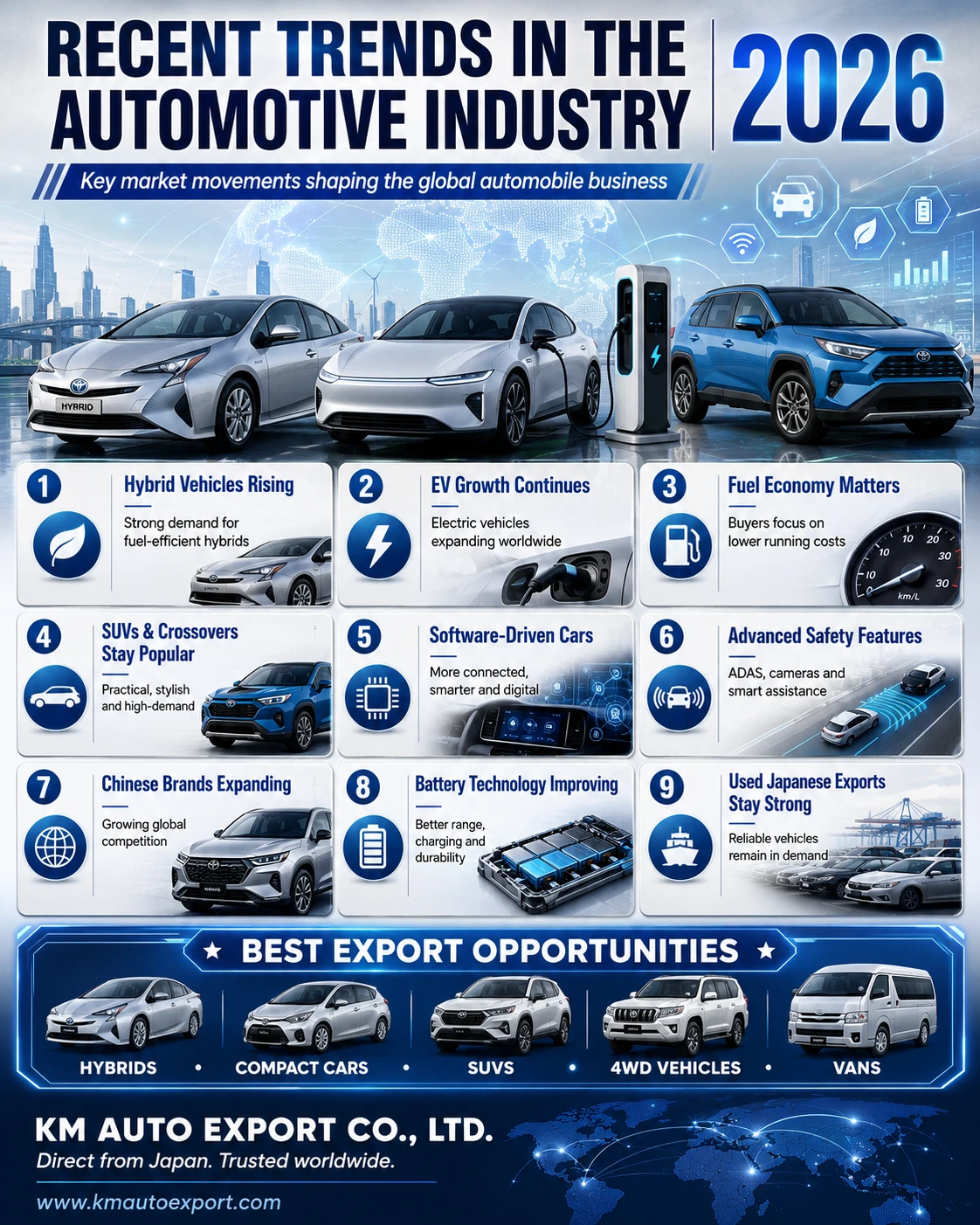
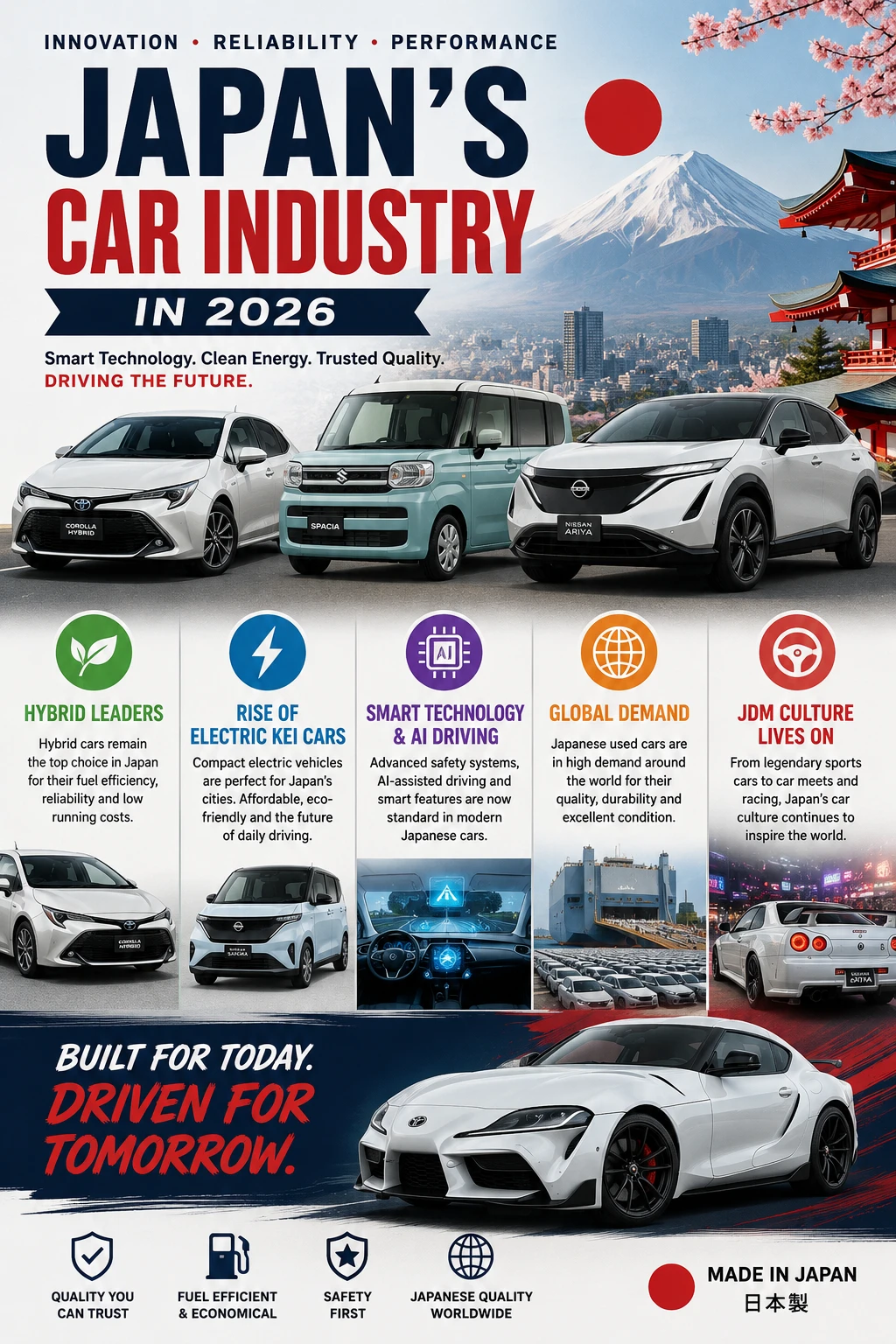
Although electric vehicles are becoming more popular worldwide, hybrid cars still dominate Japan’s domestic market. Japanese consumers continue choosing hybrids because of their excellent fuel efficiency, lower maintenance costs, and practicality for daily city driving.
Manufacturers such as Toyota, Honda, Suzuki, and Nissan are focusing heavily on improving hybrid systems while keeping vehicles affordable. Popular models including the Toyota Corolla Hybrid, Honda Fit, and Suzuki Spacia remain strong choices among Japanese buyers.
Kei cars also continue playing an important role in Japan’s transportation culture. These compact vehicles are ideal for narrow roads, crowded cities, and limited parking spaces. Their low ownership costs and high fuel economy make them extremely popular across the country.
Rise of Electric Kei Cars
One of the biggest automotive trends in Japan is the development of electric kei cars. Japanese manufacturers are now investing in compact EVs designed specifically for local urban environments.
Vehicles like the Nissan Sakura have already shown strong demand in the domestic market. Automakers believe smaller electric cars are better suited for Japan compared to larger luxury EVs commonly seen in Western markets.
With government support and improvements in charging infrastructure, Japan’s EV market is expected to grow steadily over the next few years.
Smart Technology and AI Integration
Modern Japanese vehicles are becoming smarter than ever before. Many 2026 models now include advanced safety systems, AI-assisted driving technologies, adaptive cruise control, and intelligent parking support.
Nissan, Toyota, and Honda are actively investing in next-generation software systems to improve driver safety and convenience. Features once available only in luxury vehicles are now appearing in compact everyday cars.
Artificial intelligence is also helping manufacturers improve fuel efficiency, battery performance, and driving assistance systems.
Strong Demand for Japanese Used Cars Worldwide
Japan remains one of the largest exporters of used vehicles globally. Buyers from Africa, Asia, the Caribbean, and the Pacific continue choosing Japanese used cars because of their reliability, condition, and affordable prices.
Countries such as Kenya, Tanzania, New Zealand, Jamaica, and East Timor continue importing large numbers of Japanese vehicles every year.
The strong inspection system in Japan allows many used vehicles to remain in excellent condition even after several years of use. This continues making Japanese vehicles highly attractive in international markets.
JDM Culture Still Thriving
Despite the growth of EVs and AI technology, Japan’s legendary JDM (Japanese Domestic Market) culture remains extremely popular worldwide.
Car enthusiasts still admire iconic Japanese sports cars such as the Nissan GT-R, Toyota Supra, Mazda RX-7, Honda Civic Type R, and Subaru WRX STI. Car meets, drifting events, and tuning culture continue attracting enthusiasts from around the world.
Japan remains a dream destination for automotive fans who appreciate performance, engineering, and unique car culture.

KM AUTO
Content WriterKM Auto Export Co. Ltd. is a trusted Japanese vehicle export company supplying quality used and new cars worldwide. We source directly from top auctions and certified dealers across Japan, ensuring every vehicle is carefully inspected and professionally prepared for export. With reliable logistics and full documentation support, we deliver a smooth, transparent, and dependable export experience — building long-term partnerships with customers around the globe.
0 Comments
Drop your comment
Popular Blog